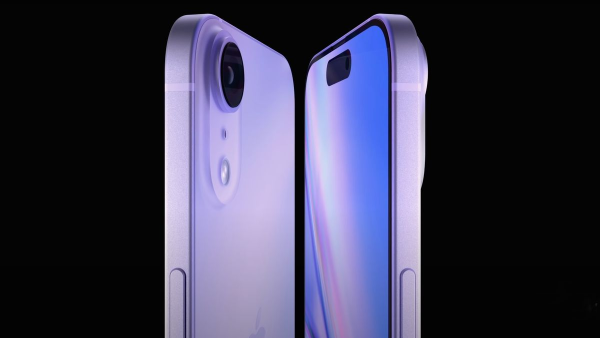
Foldable iPhone Design Leaked Through Early Case Listings
Apple’s long-rumored foldable iPhone may have taken a significant step closer to reality. A newly surfaced protective case listing from a third-party accessory manufacturer appears to reveal key details about the device’s final industrial design, offering one of the clearest looks yet at what Apple’s first foldable smartphone could look like.
While Apple has not officially announced the product, accessory manufacturers often receive dimensional information and mock-up units ahead of launch to prepare compatible cases and accessories. As a result, early case listings have historically provided accurate insights into upcoming iPhone designs.
If the leaked information proves accurate, Apple’s first foldable device could combine the portability of the iPhone mini with the expanded workspace of an iPad mini, creating a unique form factor within the rapidly growing foldable smartphone market.
📱 Case Listing Suggests Design Has Been Finalized #
According to the leaked accessory listing, the foldable iPhone—widely referred to as the “iPhone Fold”—adopts a book-style folding mechanism that opens horizontally from left to right.
Unlike some foldable smartphones that utilize a tall and narrow display, Apple’s approach appears to favor a wider aspect ratio. This design choice could provide a more natural experience for multitasking, media consumption, web browsing, and productivity applications.
The appearance of commercially available cases is noteworthy because accessory vendors typically begin mass production only after receiving sufficiently finalized dimensional specifications.
While this does not guarantee that every detail is final, it strongly suggests that the overall hardware design is nearing completion.
🖥️ Display Sizes: iPhone Mini When Closed, iPad Mini When Open #
One of the most interesting aspects of the leak involves the device’s display dimensions.
Reported specifications indicate:
- Outer display: 5.5 inches
- Inner foldable display: 7.8 inches
This configuration would create two distinct usage modes.
When folded, the device would offer a compact footprint similar to the discontinued iPhone mini lineup, making it easy to carry and operate with one hand.
When unfolded, the larger 7.8-inch display would approach the screen size territory of compact tablets, effectively transforming the device into a pocketable productivity and entertainment platform.
This dual-purpose design could become one of the key differentiators of Apple’s foldable strategy.
📏 Surprisingly Thin Chassis #
The leak also provides insight into the device’s physical dimensions.
Reported thickness measurements include:
- Approximately 9.5 mm when folded
- Approximately 4.5 mm when unfolded
If accurate, these figures would position the device among the thinnest foldable smartphones on the market.
Achieving a sub-5 mm unfolded thickness would require significant engineering advances in areas such as:
- Hinge design
- Battery packaging
- Internal component layout
- Display stack integration
- Thermal management
Thinness has historically been a major focus of Apple’s industrial design philosophy, making these dimensions consistent with the company’s broader hardware direction.
📸 Dual-Camera System Expected #
Images associated with the case suggest that the foldable iPhone will feature a dual-camera array on the rear.
Current reports indicate the system may include:
- 48MP primary camera
- 48MP ultra-wide camera
Notably absent is a dedicated telephoto lens.
While some flagship smartphones offer triple-camera systems, omitting the telephoto module would be understandable given the extreme space constraints of a foldable design. Foldable devices must allocate significant internal volume to the hinge mechanism, flexible display components, and battery system, leaving less room for complex camera assemblies.
Apple may instead rely on high-resolution sensor cropping and computational photography to provide zoom functionality.
🔐 Touch ID Returns, Face ID May Be Removed #
One of the most surprising rumored specifications is the reported return of Touch ID.
According to current information, the foldable iPhone will feature:
- Side-mounted Touch ID
- No Face ID hardware
This would mark a major departure from Apple’s premium iPhone lineup, which has relied almost exclusively on Face ID since the launch of the iPhone X.
There are several possible reasons for this decision:
Space Constraints #
Foldable devices have significantly less room for large sensor arrays and infrared projection systems.
Internal Design Simplification #
A side-mounted fingerprint reader reduces complexity and allows more space for the folding mechanism.
Cost Optimization #
Removing Face ID components could help offset the higher manufacturing costs associated with foldable displays.
Although Face ID remains one of Apple’s signature technologies, Touch ID has proven reliable and efficient in previous devices such as the iPad Air and iPad mini.
⚙️ A20 Pro and 12GB RAM Reportedly Planned #
On the performance side, the foldable iPhone is expected to ship with Apple’s next-generation A20 Pro processor.
Rumored hardware specifications include:
- A20 Pro SoC
- 12GB RAM
- Advanced AI capabilities
- Enhanced multitasking support
- Improved power efficiency
The increase to 12GB of memory would be particularly important for a foldable device, where larger displays and multitasking workloads place greater demands on system resources.
Additional memory would also support Apple’s expanding on-device AI features and future iterations of Apple Intelligence.
🧲 What Does the MagSafe Cutout Mean? #
The leaked case includes a circular rear cutout consistent with Apple’s MagSafe accessory ecosystem.
However, this should not be interpreted as confirmation that the foldable iPhone itself will support MagSafe in exactly the same way as current iPhone models.
Case manufacturers often include MagSafe-compatible designs based on assumptions, preliminary specifications, or compatibility requirements.
Until Apple officially announces the device, wireless charging capabilities remain uncertain.
🚀 Apple’s Foldable Strategy Is Taking Shape #
Foldable smartphones have matured significantly over the past several years, yet Apple has remained notably absent from the category.
If the leaked information is accurate, Apple’s first foldable device appears focused on refinement rather than experimentation. Instead of pursuing extreme form factors, the company seems to be emphasizing a practical balance between portability and productivity.
The combination of:
- A compact folded footprint
- A tablet-sized inner display
- Premium camera hardware
- Next-generation silicon
- Thin industrial design
could allow Apple to enter the foldable market with a product that feels distinctly different from existing competitors.
While many details remain unofficial, the appearance of early protective cases suggests that Apple’s foldable iPhone is moving beyond the prototype stage. With design specifications seemingly finalized and supply chain activity accelerating, the industry’s attention is increasingly turning toward what may become one of Apple’s most significant hardware launches in years.