20th Anniversary iPhone Pro Max: 7-Inch Display and New Design
Apple is reportedly preparing a major iPhone redesign for 2027, the 20th anniversary of the original iPhone. Supply chain reports indicate that the company is sampling a 6.96-inch display, effectively bringing the flagship Pro Max model to the 7-inch class while potentially keeping its physical footprint close to current-generation devices.
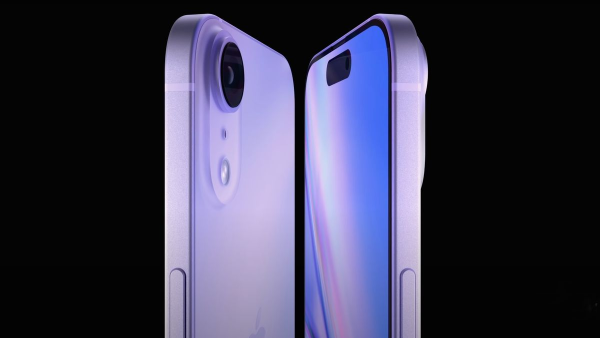
The display is expected to be paired with substantially narrower bezels, curved glass along all four edges, and a broader redesign of Apple’s established iPhone form factor.
If the reported specifications materialize, the 20th Anniversary iPhone could represent the most significant industrial-design transition since the iPhone X introduced Apple’s modern edge-to-edge display language in 2017.
Display Design Pushes Toward the 7-Inch Class #
The iPhone Pro Max display has gradually increased in size over successive generations.
The iPhone 11 Pro Max featured a 6.5-inch panel, while the iPhone 13, 14, and 15 Pro Max generations moved to 6.7 inches. The iPhone 17 Pro Max subsequently increased the display size to approximately 6.86 inches.
The reported 20th Anniversary model would take another step forward with a 6.96-inch display.
At nearly 7 inches diagonally, the panel would provide substantially more visual area while remaining within the physical constraints of a conventional large-screen smartphone.
1.1 mm Symmetrical Bezels #
The most significant change may not be the diagonal measurement itself, but how Apple achieves it.
Reports indicate that the anniversary iPhone could feature symmetrical bezels measuring approximately 1.1 mm on all four sides.
Such narrow borders would allow Apple to increase usable display area without proportionally increasing the external dimensions of the phone.
The result would be a higher screen-to-body ratio and a more immersive front-facing design.
Quad-Curved Glass #
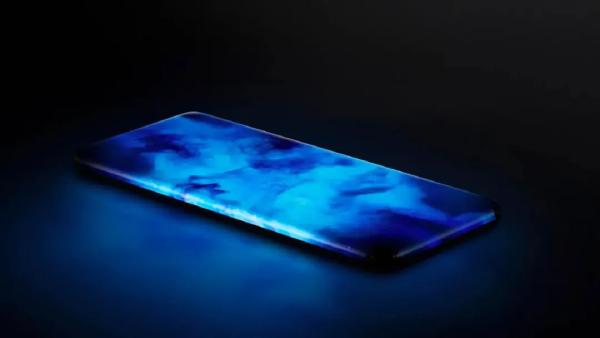
The display assembly is also expected to incorporate a curved glass treatment around all four edges.
Rather than limiting curvature to the left and right sides, the reported design would extend the transition around the entire perimeter. This could create a visually continuous surface between the display and chassis.
The intended effect is a more seamless, floating-display appearance while further reducing the visual distinction between the active screen and the surrounding frame.
A Complete Industrial Design Redesign #
The 20th anniversary milestone is reportedly prompting Apple to reconsider more than the display.
The overall exterior design could receive a comprehensive overhaul, similar in significance to the transition represented by the iPhone X.
Larger Screen, Similar Physical Size #
One of the most technically interesting aspects of the reported design is the relationship between display size and chassis dimensions.
A 6.96-inch display would normally suggest a larger device. However, reducing the bezel width to approximately 1.1 mm could offset much of the additional panel area.
Consequently, the anniversary Pro Max could maintain dimensions comparable to current large iPhone models—or potentially become slightly smaller despite its larger display.
This approach would allow Apple to increase screen real estate without making the device proportionally more difficult to handle.
The iPhone X Precedent #
Apple used the iPhone X to mark the original iPhone’s 10th anniversary in 2017. That model introduced a major visual transition, replacing the traditional top and bottom bezels with an edge-to-edge OLED design and Face ID-based front hardware.
With 2027 marking the 20th anniversary, Apple appears to be positioning another flagship redesign around the milestone.
The significance would therefore extend beyond a larger display. The anniversary model could establish another design language that influences subsequent iPhone generations.
New Flagship Models and Foldable iPhone Development #
Reports indicate that Apple is evaluating multiple high-end devices for the 2027 product cycle.
V73 and V74 Anniversary Models #
According to reports attributed to Bloomberg, Apple is internally testing two 20th Anniversary iPhone models under the codenames V73 and V74.
The existence of multiple prototypes suggests that Apple is evaluating different configurations rather than committing to a single final hardware design at this stage.
The precise commercial positioning of these models remains unclear, and internal product codenames do not necessarily indicate how the devices will ultimately be marketed.
Next-Generation Foldable iPhone #
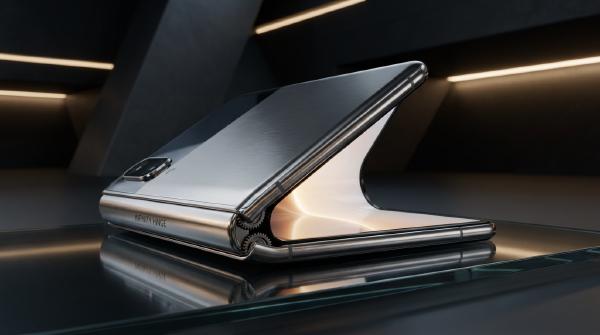
Apple is also reportedly developing a second-generation foldable iPhone for the same broader release window.
If the anniversary Pro Max redesign and foldable iPhone arrive within the same product cycle, 2027 could become an unusually important year for Apple’s smartphone hardware strategy.
The two product categories would address different form factors: the anniversary iPhone would push the conventional slab design toward a more immersive front surface, while the foldable would introduce a fundamentally different display architecture.
16GB RAM Could Support Apple’s On-Device AI Strategy #
Another reported hardware upgrade is an increase to 16GB of RAM, potentially making it the first iPhone generation to reach that capacity.
The increase would provide additional headroom for increasingly sophisticated on-device workloads.
Memory Requirements for On-Device AI #
Generative AI and other machine-learning workloads can place substantially greater demands on memory than conventional smartphone applications.
Larger models, multimodal processing, local inference, background AI services, and more sophisticated application-level agents all benefit from additional memory capacity.
Moving to 16GB would therefore give Apple more flexibility in implementing future on-device AI capabilities without relying as heavily on cloud processing.
It could also improve multitasking behavior by allowing more applications and system services to remain resident in memory.
However, RAM capacity alone does not determine AI performance. Memory bandwidth, accelerator architecture, thermal limits, model compression, software optimization, and Apple’s Neural Engine or future AI hardware will all remain important factors.
Early Engineering Samples Mean Specifications Can Change #
The reported hardware remains at an early development stage.
Current information is associated with Engineering Validation Test (EVT) and Design Validation Test (DVT) sampling rather than final production hardware. These stages are used to validate industrial design, component integration, electrical characteristics, thermal behavior, and manufacturing requirements before mass production.
With approximately a year remaining before the expected commercial launch window, Apple could still modify the display assembly, chassis dimensions, internal components, camera configuration, or other hardware characteristics.
Therefore, the reported 6.96-inch panel, 1.1 mm bezels, quad-curved glass, and 16GB RAM should be treated as development specifications rather than confirmed retail specifications.
The 20th Anniversary iPhone Could Redefine Apple’s Flagship Design #
The reported 2027 iPhone roadmap points toward a broader transformation than simply increasing display size.
A nearly 7-inch panel combined with 1.1 mm symmetrical bezels could significantly increase screen area without requiring a substantially larger chassis. Quad-curved glass could further reinforce the borderless aesthetic, while a potential 16GB memory configuration would provide additional headroom for on-device AI and advanced multitasking.
At the same time, the reported V73 and V74 anniversary devices and next-generation foldable iPhone suggest that Apple may use its 20th anniversary to introduce multiple interpretations of its next smartphone architecture.
If these plans survive Apple’s development and validation process, the 20th Anniversary iPhone could become a defining hardware transition comparable to the iPhone X—but with display engineering, industrial design, and on-device AI all playing central roles.