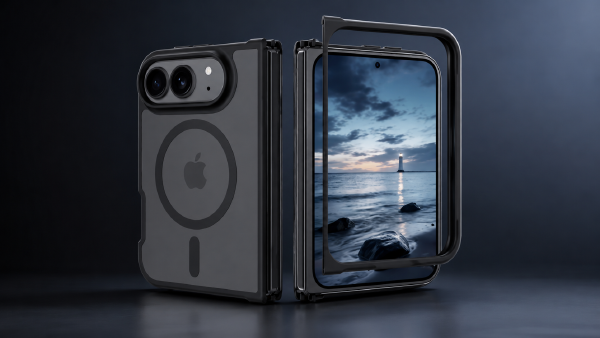
Apple Foldable iPhone Ultra Reportedly Enters Mass Production Ahead of September Launch
With Apple’s annual product launch event just two months away, activity across its global supply chain is accelerating. While earlier reports suggested that Apple’s long-rumored foldable iPhone might miss its expected launch window due to manufacturing complexity, the latest supply chain information indicates that production has reached a major milestone.
According to multiple industry sources familiar with Apple’s manufacturing partners, the foldable iPhone Ultra has officially entered mass production, keeping the device on track for a potential September debut. Although Apple has yet to confirm its product roadmap, current manufacturing progress suggests that production schedules remain on target.
📱 Foldable iPhone Enters Mass Production #
Earlier this year, industry analysts expressed concerns that Apple’s first foldable iPhone could face delays because of its highly complex assembly process. Foldable smartphones require significantly tighter manufacturing tolerances than conventional flagship devices, particularly in areas such as hinge construction, flexible display integration, and structural durability.
However, recent reports from Apple’s supply chain indicate that these challenges have largely been overcome.
According to manufacturing sources, the production timeline currently supports September shipments without significant obstacles. The remaining uncertainty is not production readiness but Apple’s launch strategy.
Apple has not yet confirmed whether the foldable iPhone Ultra will debut alongside the iPhone 18 Pro during its traditional September event or receive a dedicated launch at a later date.
🚀 Initial Supply Expected to Be Extremely Limited #
Although production has officially begun, early availability is expected to be highly constrained.
Well-known Apple analyst Ming-Chi Kuo estimates that assembly shipments for the foldable iPhone Ultra will remain below one million units throughout September 2026.
Manufacturing capacity is expected to ramp up gradually, with cumulative shipments potentially reaching approximately eight million units by December.
This limited initial production means that global demand will likely exceed available inventory during the first several weeks following launch.
Consumers may encounter:
- Limited retail availability
- Extended shipping times
- Regional shortages
- Increased reseller premiums
Supply conditions are expected to improve only after manufacturing capacity expands later in the year.
💰 Premium Pricing Appears Increasingly Likely #
Pricing is also expected to increase across Apple’s premium smartphone lineup.
Industry sources attribute part of the increase to rising memory component costs throughout 2026, which have affected multiple smartphone manufacturers.
Current market expectations suggest:
| Model | Estimated Starting Price |
|---|---|
| iPhone 18 Pro (256GB) | Around RMB 9,999 |
| Foldable iPhone Ultra | Around RMB 16,000 |
If these estimates prove accurate, the foldable iPhone Ultra would become Apple’s most expensive consumer smartphone to date.
📐 Foldable Design Focuses on Productivity #
Based on information currently circulating within the supply chain, Apple’s first foldable iPhone adopts a book-style inward-folding design, positioning it closer to foldable devices such as Samsung’s Galaxy Z Fold series rather than a clamshell design.
The reported display specifications include:
- 5.4-inch external cover display
- 7.8-inch internal foldable display
The external display is designed for one-handed operation, while the larger internal panel expands into a compact tablet-like experience.
With an aspect ratio reportedly close to 4:3, the unfolded display is expected to resemble the usability of an iPad mini, making it better suited for:
- Multitasking
- Document editing
- Web browsing
- Reading
- Productivity applications
This form factor would further blur the line between smartphones and tablets within Apple’s ecosystem.
📷 Camera System Prioritizes Thinness #
One notable compromise appears to be the rear camera system.
To maintain an ultra-thin folded profile, the foldable iPhone Ultra is reportedly equipped with only two rear cameras:
- Wide-angle camera
- Ultra-wide-angle camera
Unlike Apple’s Pro-series iPhones, current reports suggest the device will not include a dedicated telephoto lens.
This design decision likely reflects the significant internal space consumed by the foldable display, hinge mechanism, and battery system, all of which compete for limited volume inside the chassis.
⚙️ A20 Pro and 12GB Memory #
Performance is expected to remain firmly within Apple’s flagship tier.
According to current reports, the foldable iPhone Ultra will feature:
- Apple A20 Pro processor
- 12GB RAM
The combination should provide sufficient performance for advanced multitasking, on-device AI workloads, and Apple’s latest software features while supporting the larger foldable display.
Although Apple has not officially disclosed detailed hardware specifications, the inclusion of additional memory aligns with growing demands from Apple Intelligence features and increasingly sophisticated mobile AI applications.
🔍 What to Expect at Apple’s September Event #
If current supply chain reports prove accurate, Apple is preparing to enter the foldable smartphone market after years of development and industry speculation.
While the first-generation foldable iPhone Ultra is expected to launch with limited production volumes and a premium price tag, its introduction would represent one of Apple’s most significant hardware innovations since the debut of the iPhone X.
Much remains unconfirmed—including launch timing, pricing, and final specifications—but mass production suggests that Apple’s foldable ambitions are moving from prototype to commercial reality. The company’s September event is now expected to provide the first official look at what could become a new flagship category within the iPhone lineup.